For an applied wall graphic
Begin with the wall: paint type and age, texture, moisture and cleaning. The engineering-and-arts concept shows a graphic crossing a return; a measured survey and suitable material must resolve that corner in the actual space.
Return to the identity concept →For a mounted display
Begin with the content and its future updates. Panel weight, wall structure, edge projection and the fixing method need review together. Changing names each year is a different brief from a permanent history wall.
Explore the recognition concept →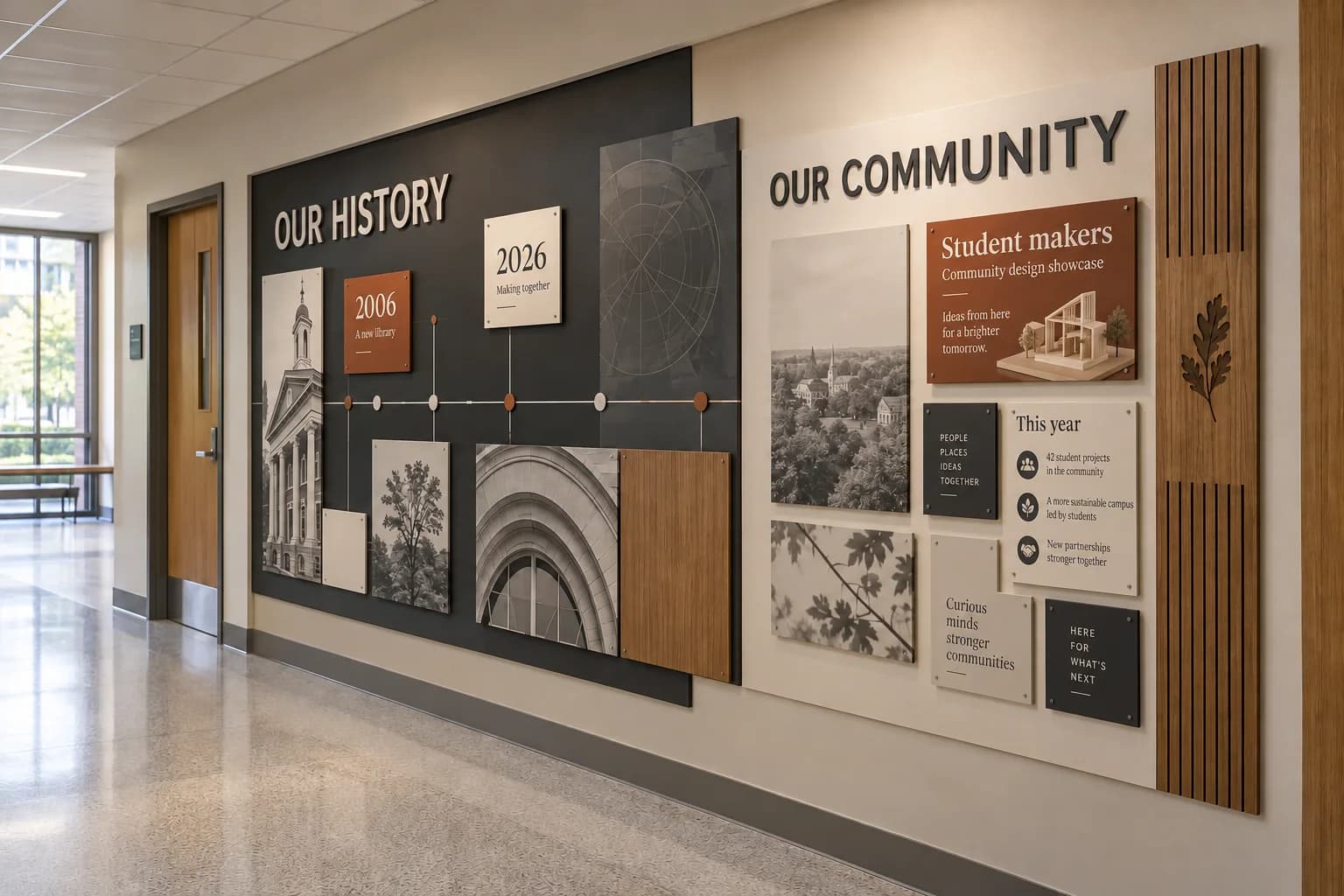
Closer view of illustrative recognition concept
- Surface & finish
- Review the actual sample and cleaning requirements.
- Edges & projection
- Confirm dimensions, attachment and clearance.
- Future updates
- Plan access and who will change the content.
Plan the change before it happens.
A recognition display may need new content each year. Separating a permanent title from changing panels is one possible approach. The actual material, fixing and update method still need to be specified.
This visualization explains the idea. It does not establish a tested assembly or fabrication capability.
Four questions that shape the choice.
The wall underneath
Paint, texture, moisture and surface condition affect an applied graphic. A photo begins the conversation; inspection and appropriate adhesion testing inform final selection.
The way it is used
Daily cleaning, contact, sunlight and access affect the finish and system. Share the institution’s maintenance practices and any site requirements.
The next update
Decide whether the whole graphic stays in place or individual content changes. Update frequency, access and the person doing the work influence the design.
The attachment
A mounted panel needs a suitable substrate and fixing method. Grade, weight, edge, projection and installation details are reviewed together.
From screen to surface
Review the actual sample.
A visualization shows composition. A physical sample helps assess the specified color, finish and material. The reviewed proposal should identify the product, artwork version, mounting scope and care requirements.
Final measurements, facilities approval and any fire, accessibility or other specialized requirements need the appropriate evidence and qualified review. Customer dimensions remain preliminary until verified.
Share your site conditions →Know which responsibility
belongs to whom.
Separate commitments should be clear in the reviewed project scope.
Material / manufacturer
The exact product, issuer and current terms determine coverage, conditions and exclusions. A material warranty does not cover the whole installation.
Fabrication
The produced elements have an agreed fabrication scope and responsibility, separate from the underlying material.
Installation / workmanship
The installer’s agreed scope and workmanship terms are identified for the project.
National Public Seating
NPS’s commercial agreement and accepted scope govern its fulfillment obligation to the dealer.